A German Panzer crewman and another soldier inspect the French Char B1 bis number 205 “Indochine”, 3rd Section, 3rd Company, 15th Combat Tank Battalion, 2nd Armoured Division near Le Cateau-Cambrésis, Nord-Pas de Calais. c.June 1940.
On the 17th May 1940 the 'Indochine' was knocked out by 'friendly fire' from a French 47mm anti-tank gun, the crew of: Chief - 2nd/Lt. Andre Raiffaud, Driver - Sgt. Docq, Gunner Cpl. Rollin and Chasseur Salard, all survived.
B1 tanks were used (and lost) during the first phase of the operations, especially the first week. Most counter-offensives against Guderian's "run to the sea" counted at least several B1s. Without air support these moves were doomed to failure against the quick and lethal Stuka attacks. Bad tactics of course brought these precious tanks to inept, hasty defensive "plugs" in the defensive lines, most of the time, ending in pure waste. In some case, the B1's extraordinary sturdiness allowed some success, notably the counter-attacks at laon and Moncornet led by col. De Gaulle, and stiff resistance like at Hannut and particularly Stonne. During these events, some individual B1s blocked by themselves the German advance, inflicting horrendous casualties. In a particular case, a single B1, 'Eure', commanded by Captain Pierre Billotte, attacked frontally and destroyed single-handedly thirteen Panzer IIIs and IVs, and then withdrew, while being hit 140 times. During two days, B1 tanks from the 3rd Division Cuirassée de Réserve literally ruled the battlefield at Stonne, destruction coming only due to German overwhelming attacks against single tanks and excellent communication, air strikes and indirect fire (by German howitzers). Some B1s also broke down or ran out of ammunition and petrol. The last surviving B1s were mixed with other tanks in support of the so-called "hedgehogs", which fell one after the other in June 1940. By the 26th of June, the campaign was over. (
http://www.tanks-encyclopedia.com/)
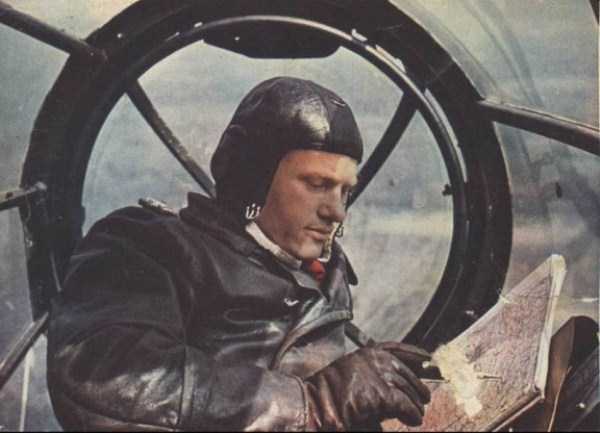
The Panzer crewman wears a M1934 Schutzmütze (‘Panzer Beret’). Designed to offer special protection against the hazards of head injury, the unique headdress was comprised of two parts; the inner was a rubber crash helmet and this was fitted with a detachable black wool covering resembling a beret. The Schutzmütze was finally phased out in January of 1941.
The uniform consisted of a short black double-breasted jacket worn with long black trousers. (in this pic., the Panzer crewman appears to be wearing a Luftwaffe leather flying jacket)