El Club del Tomcat

ee080bfdb67271bbc7b51f5435e1a389256be084.jpg
Cuidado, está uno de los malvados MiG-28 en la foto :eek:
 

Sebastian

Colaborador
@RealAirPower1
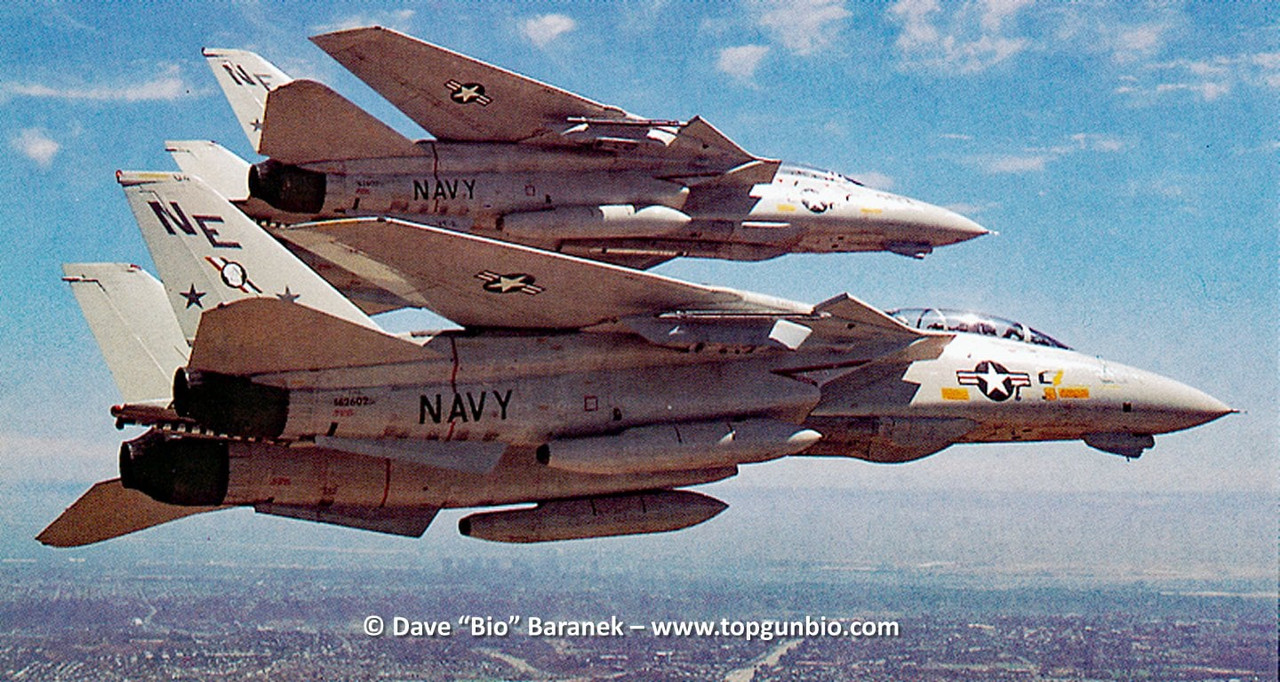
An F-14D from VF-213 "Black Lions" ongoing an eye exam (Circa January 2006). A couple of months after this photo was taken, the VF-213 began transitioning to the F/A-18F, and in April 2006, it was re-designated as VFA-213.

Un F-14D del VF-213 "Leones Negros" durante un examen de la vista (alrededor de enero de 2006). Un par de meses después de tomar esta foto, el VF-213 comenzó su transición al F/A-18F y, en abril de 2006, fue renombrado como VFA-213.

G1tBrDFXYAAZ-Pn
 
Ésta configuración no tendría mucho sentido (con la sóla finalidad de derribar varios bombarderos), salvo que fuera escoltado por otro/s F-14 con misiles Sidewinder y Sparrow?

VF-211-F-14B-Tomcat-Six-Phoenix.jpg

Si no me equivoco el "Gran Gato" fue el primero diseñado posta para el combate BVR (con el alcance del Phoenix + el hecho de que no necesitaba iluminar al misil durante su trayectoria) . . . Probablemente no fuera imperativo el tener escolta.

Cordiales Saludos
 

Finback

Miembro del Staff
Administrador
Moderador
Si, conozco que la idea era esa, pero llegado el momento de un posible no planeado dogfight, sólo tendría el cañón.
 

Monchi

Colaborador
Colaborador
556598421_10229515346043313_4599643047697952363_n.jpg

The Gringo-Gaucho were a series of exercises done by the Navies of the United States and Argentina, they involved the operation of certain squadrons (ST-2 trackers, S-3 Vikings, Alouette 3, Sea king Helicopters and more) on board a US navy carrier, in this case this picture could have been taken on USS Abraham Lincoln, USS Kitty Hawk or USS Constellation
List of operations
1990, October: USS Abraham Lincoln
1991, November: USS Kitty Hawk, including port visit to Mar del Plata
Grumman F-14A from VF-114 Aardvarks (BuNu 159836/NH-101 JUL90/DEC91) and Dassault-Breguet Super Étendard (2da Escuadrilla Aeronaval de Caza y Ataque) on CVN-72 USS Abraham Lincoln 1990-1991
Fighter Squadron 114 (VF-114) was a fighter squadron of the United States Navy that was active from 1945 through 1993. Nicknamed the "Aardvarks", it was based out of Naval Air Station Miramar, California. The squadron flew combat missions during the Korean War and Vietnam War. VF-114 was disestablished as part of the post-Cold War drawdown of forces on 30 April 1993.
 
Por lo que lei, no daban el resultado esperado considerando el mantenimiento que generaban, asi que anularon los mecanismos y los dejaron ahi.

No se si tenian una opcion de accionamiento manual, supuestamente salian al moverse las alas o con flecha maxima a gran velocidad.
En inglés se los conoce como "glove vanes" y eran activados por la computadora de datos de vuelo al superar Mach 1.4, descargando aerodinámicamente los elevones, permitiendo que la aeronave fuese capaz de realizar maniobras de hasta 7,5 g a Mach 2. Esto era crucial ya que una ve en supersónico el Tomcat era excesivamente estable.

Una vez que los F-14 comenzaron a llegar a los escuadrones de primera línea, la experiencia operativa demostró que los beneficios que aportaban eran marginales, mientras que agregaban peso y el mantenimiento de sus actuadores resultaba un verdadero dolor de cabeza por lo que fueron anulados y más tarde eliminados en los modelos posteriores.
 

Monchi

Colaborador
Colaborador
Por lo que lei, no daban el resultado esperado considerando el mantenimiento que generaban, asi que anularon los mecanismos y los dejaron ahi.

No se si tenian una opcion de accionamiento manual, supuestamente salian al moverse las alas o con flecha maxima a gran velocidad.


F-14 Tomcat ATG/Radio Show
Naval Weapons Industrial Reserve
Plant, Calverton
Glove Vanes and Their Purpose..
An extendable glove vane is located in the leading edge of each wing glove. When extended, these triangular-shaped surfaces increase the aircraft’s wing area, adding lift and reducing the excessive longitudinal stability encountered in the supersonic regime.
The right glove vane is powered by the Flight Hydraulic System, while the left is powered by the Combined Hydraulic System.
The glove vanes begin to extend automatically with the maneuver flaps and slats once the wings sweep aft of 25°. Extension angle increases with greater wing sweep until, at 35° wing sweep, the glove vanes are fully extended in conjunction with the maneuver flaps and slats.
From Mach 1.0 to 1.4 IMN (Indicated Mach Number), the glove vanes extend proportionally in response to pilot thumb-wheel inputs located on the stick. Automatic extension is controlled by the CADC; at Mach 1.4 they reach full extension (15°). A thumb wheel allows the pilot to override automation.
Through a feedback loop, each glove vane’s position is compared with the commanded position. If a discrepancy occurs, both vanes automatically retract and the Glove Vane Caution light illuminates. Transit failures can be reset by pressing the Master Reset push button. Selecting Wing Sweep “Bomb Mode” automatically extends the glove vanes for Mach < 0.35 and retracts them above that speed. Manual commands are automatically reset to retract when Mach 1.0 is passed in either direction.
Anytime, Baby…!
549430806_24487440077585419_2323336485453877082_n.jpg
 
Arriba