
Estás usando un navegador obsoleto. No se pueden mostrar estos u otros sitios web correctamente.
Se debe actualizar o usar un navegador alternativo.
Se debe actualizar o usar un navegador alternativo.
Noticias de la Fuerza Aérea de Chile
- Tema iniciado Hoot
- Fecha de inicio


Buena noticia ver de nuevo al 982 volando.
Del 983? "stored"
Ojalá no sea así.
Saludos
Del 983? "stored"
Ojalá no sea así.
Saludos


El 983 no estaba en exposición estática?al menos en la ultima Fidae estaban los 2 volando 982 y 983
creo que venia de USA post-arreglines...voy a buscar fotos o videos de todas las salidas de aniversarios FACH, Sinkex25 y otras muestras del poder aereo.El 983 no estaba en exposición estática?

Al 983 hace como 3 años que no se le ha visto en vuelo, y seguro que eso tiene que ver con el contrato firmado con Boeing para dar sostenimiento a nuestros 2 KC-135E, aunque también puede ser que esté en reserva porque el presupuesto de la FACh no da para tener a los 2 operativos (esos 8 motores Pratt & Whitney TF33-PW-102 son de alto consumo de combustible).
https://www.facebook.com/1000671663...ach-fidae-2024-09-04-2024-03/793700796212125/ del 9-4-2024Al 983 hace como 3 años que no se le ha visto en vuelo, y seguro que eso tiene que ver con el contrato firmado con Boeing para dar sostenimiento a nuestros 2 KC-135E, aunque también puede ser que esté en reserva porque el presupuesto de la FACh no da para tener a los 2 operativos (esos 8 motores Pratt & Whitney TF33-PW-102 son de alto consumo de combustible).
Yo me refería a que al 983 no se le ha visto "volando" desde antes de la Parada Militar de 2023 (no estuvo en las de 2023 y 2024 seguro, pero igual salta la liebre y desfila en la de este año 2025).
Dejo aquí un video donde los responsables del proyecto Pillán II explican cuáles son los objetivos que se buscan alcanzar con este avión.
Advierto que la visualización de este video es optativa y totalmente voluntaria, no vaya a ser cosa que se me acuse de hacer lobby y/o publicidad engañosa con fines propagandísticos
Advierto que la visualización de este video es optativa y totalmente voluntaria, no vaya a ser cosa que se me acuse de hacer lobby y/o publicidad engañosa con fines propagandísticos
Pasito a pasito se va concretando el proyecto para mejorar las capacidades satelitales

ENAER promociona el nuevo entrenador Pillán II de la Fuerza Aérea de Chile ante agregados militares y de Defensa de la región

ENAER promociona el nuevo entrenador Pillán II de la Fuerza Aérea de Chile ante agregados militares y de Defensa de la región
En vista de la necesidad de reforzar su proyección internacional, la Empresa Nacional de Aeronáutica de Chile (ENAER) presentó oficialmente el nuevo
 www.zona-militar.com


Para mirar de reojo:
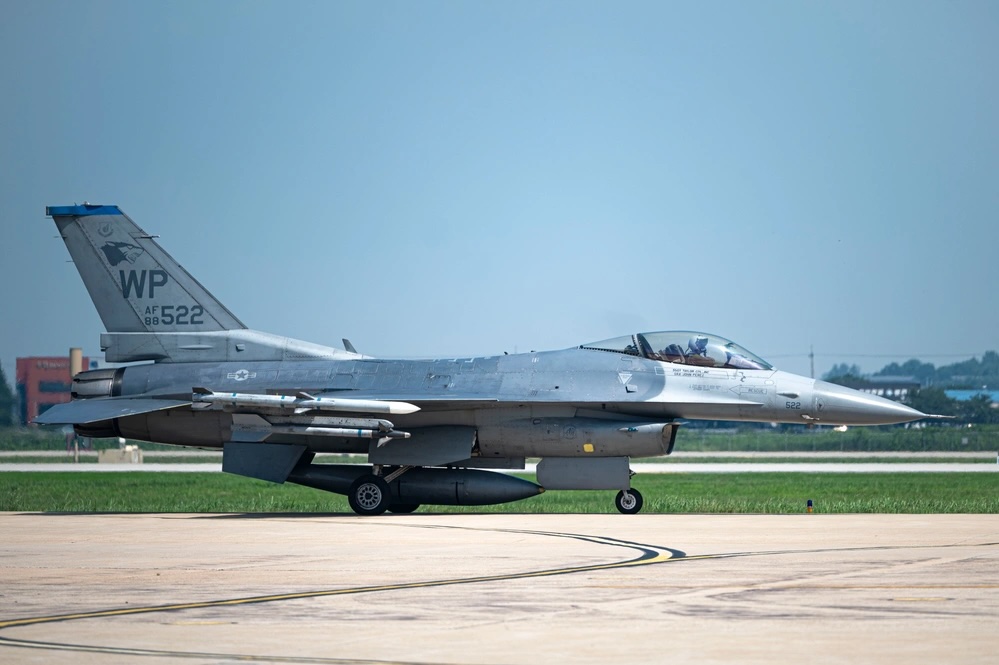
 www.airandspaceforces.com
Interesante este tema para la FACh...
Estan testeando las sinergias de operar un gran numero de aviones en una misma base, explorando eficiencias en el área del mantenimiento y operación.
En Chile lo que más se acerca a ese modelo de logística compartida y centralizada en un solo lugar es la Base Aérea de Cerro Moreno en Antofagasta, donde hay dos grupos de F-16 AM/BM (G7 y G8, con un total combinado de 34 unidades encontrándose allí la Escuela de F-16. Además están las 2 células originalmente destinadas para los mecánicos -no se si allí o en Santiago- y el Block-10 inoperativo de instrucción). Con el permiso de los estadounidenses, hay materia prima para un "super-escuadrón" :risas: de resultar exitoso el experimento. Nota aparte es tener 2 de esas agrupaciones en un impresionante total de 62 aviones en una sola base, y a sólo 80 millas de la frontera con Corea del Norte.
Eso si que es efecto volumen...
Esto también hace atractivo que el reemplazo del F-5 sean más F-16 C/D en el G-12... porque habría sinergias logísticas con lo ya existente, que podría perfectamente fortalecer la interoperatividad y hasta las rotaciones con el Grupo 3 de Iquique y viceversa, por ejemplo, cuando haya que mover parte de cada grupo a reforzar el otro extremo en caso de necesidad, aquí las herramientas, armamentos y vituallas que existan en la base que recibe (Iquique o Punta Arenas), serían compatibles y útiles también para quien llega.
Como hablamos hace un tiempo con @Ciclista2 ya con unos 14 F-16 C/D B50 más (12 para el G-12 y 2 para el G-3, -yo propongo Block 50 usados Peace Xenia II griegos que la HAF no va a modernizar- por tener una esperanza de vida de célula de 12.000 con LIFEX que es más que suficiente para el periodo de validez tecnológica -2050- y por ser modernizables a V en caso de estimarse necesario) podríamos tener las bases de los extremos con números mínimos para rotar. De un grupo de 12, 4 lo tienes en mantención, y hasta 8 operables -o dos escuadrillas-, mientras que los F-16 de Antofagasta llegan a aportar volumen de fuerza. Con este planteamiento, parte importante de los avituallamientos, mecánicos, armamento y repuestos en las bases serían comunes para todas las versiones de F-16, permitiendo interoperar fluidamente en cualquiera de las bases desde donde te toque aterrizar/despegar.
Si el estudio de la USAF llega a la conclusión de que las sinergias de operación y mantenimiento se dan en torno a un número óptimo de 31 de tamaño de escuadrón (o super-escuadrón), podríamos pensar en números algo más grandes que sólo 14 F-16 usados por los Tigre III. Mirando lo que compró la FACh en 2007 y 2009, hablamos de un tamaño de grupo de 18 unidades considerando la atrición normal, eso significaría un guarismo original de 18 F-16 reemplazo Tiger + 8 F-16 complemento Grupo 3 = 26.
Este guarismo permitiría lo siguiente: 18 F-16 C/D operando por base (Iquique o Punta Arenas) con un 33% de aviones en mantenimiento (6), daría +-12 aviones "serviceables", que podrían reforzar orgánicamente la base del otro extremo que ya tiene 18 unidades en nómina, totalizando la receptora un potencial de hasta 30 unidades, un valor muy cercano al número óptimo que está estudiando la USAF.
Con eso, sencillamente, daría lo mismo el avión 4.5 gen que se adquiera en algún país vecino cercano en los números conocidos, porque el efecto cantidad y multiplicación de fuerza que ya tendría la FACh con todo su bagaje-doctrina acumulado hasta el momento, seguirían siendo contundentes, pero con la ventaja de comprar y operar más barato, consiguiendo sinergias logísticas, flexibilidad de operar desde cualquier base y más horas de vuelo.
PD: 44+26=70 (ideal: todos los grupos con rotaciones y margen para pérdidas por atrición) ó 44+14=58 (más viable política y financieramente)
PD2: Pensar en otros modelos recién en 2040+, cuando los MLU agoten sus horas de célula.
PD3: Sobre los aviones B50 Griegos que no se pasan a V (2 oportunidades entre lo que otros desechan):
1) Block 50 noventeros pero prácticamente estandarizados con los chilenos: producto de la electrónica cascadeada de los 52+/52advanced HAF que pasaron a V (APG-68V9, MMC-7000, entre otros) los B50 griegos alcanzarían un estandar electrónico similar al de nuestros Block 50M+ por lo que de recibir algunos, estarían casi estandarizados logísticamente, incluyendo motor GE-F110-229.
2) Electrónica cascadeada para los MLU como solución de modernización costo-efectiva: Dado que Grecia está modernizando 84 unidades a V, como dice la fuente, al descontar los 38 B50 como receptores de electrónica cascadeada, quedarían otros 46 sets "excedentes" .... ¿cómo veríamos algunos de esos sets con APG-68V9 en nuestros MLU en el entendido de que el estandar Viper (costo USD 20 millones por unidad) puede que no sea costo-eficiente para la vida que les queda? -de hecho, esa cifra en electrónica excedería el costo que pagó el país por la célula completa-.
PD4: Ya existe la solución de retrofit de APG-68V9 en F-16 A/B Block 15:
APG-68(V)9 on F-16 Northrop Grumman Electronic Systems in Linthicum Heights, MD received a $99.5 million firm-fixed-price contract for “government furnished property for the Government of Pakistan” under the F-16 Block 50/52 new aircraft and modernization program. “The procurement of 54 AN/APG-68 (V)9 Radar Systems will be accomplished under the firm-fixed-price portion of the contract.” At this time, $49.75 million have been obligated, and work will be complete May 2010. The Headquarters Aeronautical Systems Center at Wright-Patterson Air Force Base, OH issued the contract (FA8615-07-C-6033). These efforts are part of Pakistan’s $5.1 billion F-16 fleet expansion and upgrade program, and a January 10, 2007 press release from Northrop Grumman provides further clarity. The 54 radar units break out in the DSCA request as 36 accompanying the 36 new F-16s, plus 7 spares for the new aircraft, plus 10 spares for retrofits of older F-16s. That makes only 53. But the January 10, 2007 Northrop Grumman release, which DID considers more authoritiative, cites just 52 of its AN/APG-68(V)9 radars for the $49.75 million order: 18 new radars for F-16 Block 52+ aircraft, plus retrofit kits for 34 existing F-16 A/B Block 15 […]
 quwa.org
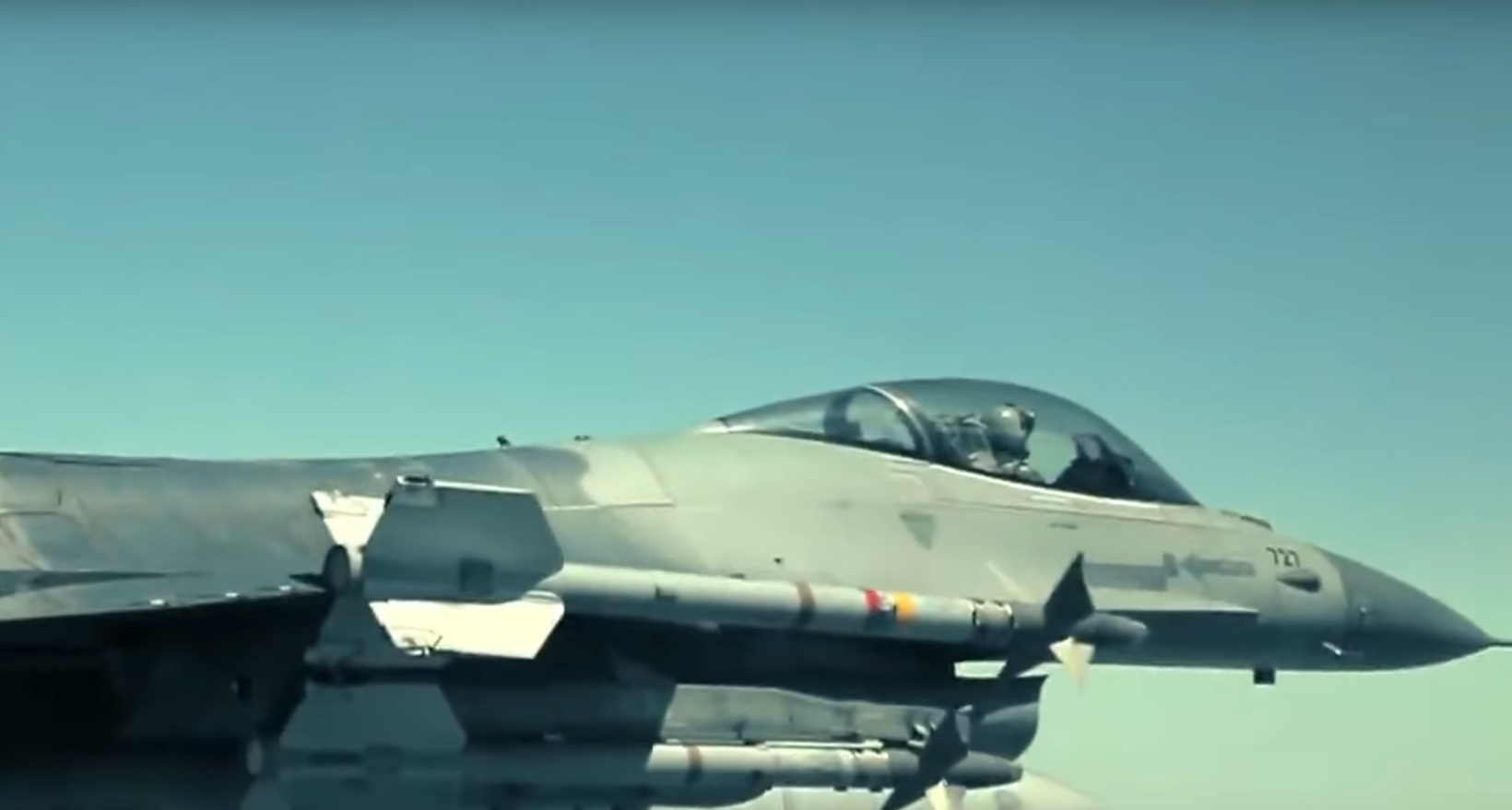
TAI de Turquía tiene la experiencia de instalar APG-68V9 en F-16 MLU.
Con eso los MLU ganarían capacidad SAR alta resolución, mejores capacidades de ataque a tierra y un mayor alcance en todos los modos por una suma mucho más económica, de acuerdo a la vida que les queda.
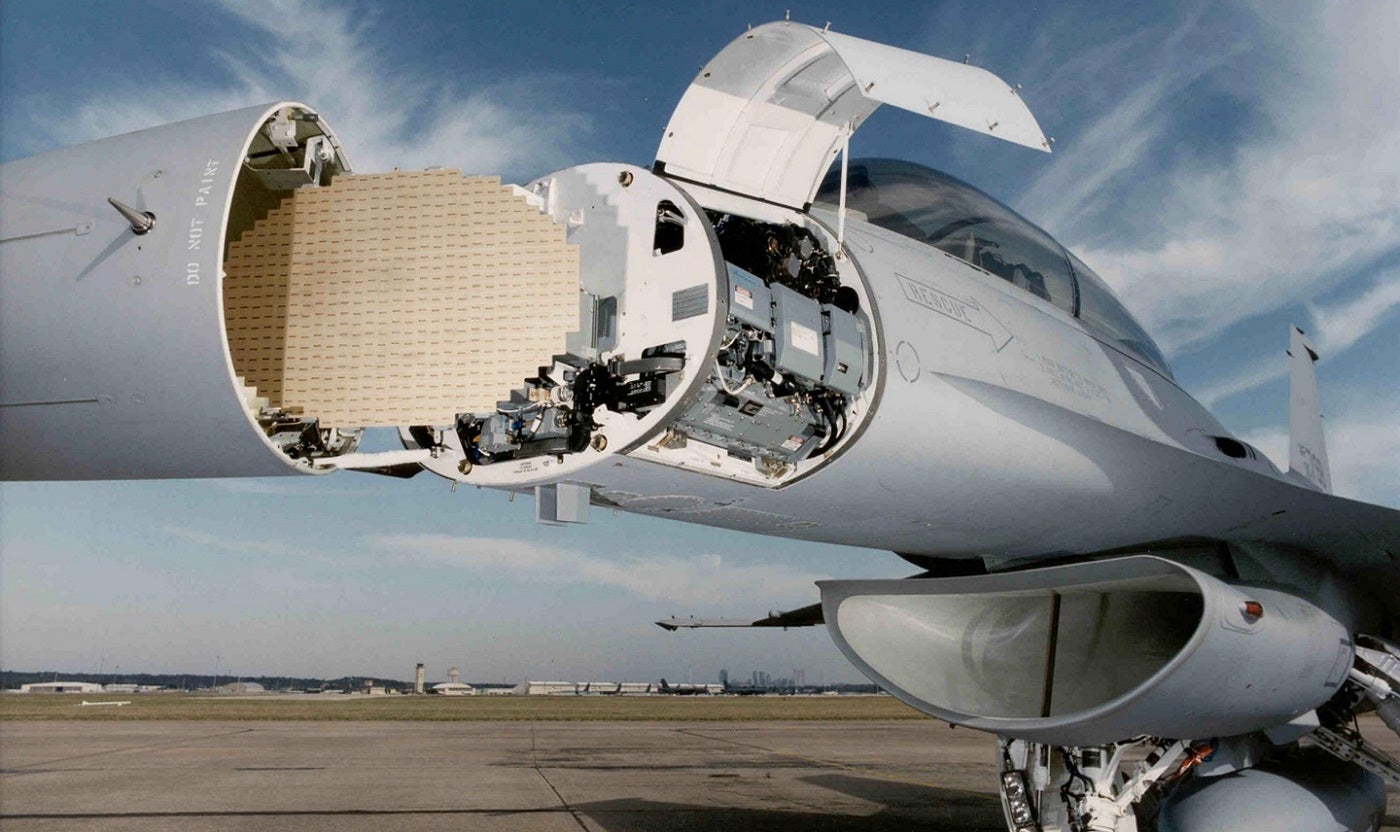
PD5: Soporte con contratos vigentes hasta por lo menos 2030 para 11 países para el APG-68V9:
 www.airforce-technology.com
Con ello, la flota F-16 FACh en ambas variantes quedaría realmente estandarizada en electrónica por un costo asumible.
Saludos
U.S. Air Force tests super squadron model
NewsAviationPRESS RELEASES
ByColton Jones
Jul 31, 2025
Modified date: Jul 31, 2025
Photo by Tallon Bratton
The U.S. Air Force has launched the next phase of its Super Squadron Test by relocating the first wave of F-16 Fighting Falcons from Kunsan Air Base to Osan AB in South Korea.
Starting July 28, the 36th Fighter Squadron at Osan began receiving F-16 aircraft as part of the broader initiative to evaluate whether consolidating a larger number of jets and support personnel under one wing can increase combat power while improving operational efficiency.
“Osan is receiving additional F-16s as part of the Air Force’s Super Squadron Test Part II initiative, which is a force-optimization test designed to see if a larger, consolidated squadron can generate more combat power and operate more efficiently,” said Capt. Bryce Hughes, 51st Maintenance Group Officer and Sortie Generation Flight commander.
According to the Air Force, approximately 31 F-16s and nearly 1,000 Airmen are expected to be temporarily reassigned from Kunsan to Osan by October 2025, when Phase II of the test is scheduled to begin in full. The transition follows Phase I, which began in October 2024 with the movement of nine F-16s and 150 Airmen to Osan.
The test is being managed by the 51st Fighter Wing and the 36th Fighter Generation Squadron at Osan AB, with a focus on validating efficiencies in areas such as aircraft maintenance, manpower integration, and logistics support.
Senior Master Sgt. Jason Thomas, 51st Maintenance Group Sortie Generation Flight chief, emphasized how the transition is already testing the Air Force’s push toward flexible and resilient operational models.
“I hear a lot about concepts like Multi-Capable Airmen or Mission Ready Airmen, but our Airmen are truly making the concept a reality,” Thomas said. “It’s truly impressive how our Airmen have been able to adjust.”
As part of the integration, maintainers originally assigned to Osan are now working alongside the incoming 36th Fighter Generation Squadron personnel to cross-train and streamline sortie generation.
The test is expected to continue through October 2026, providing a long-term evaluation of whether this larger, centralized force structure can support combat readiness and streamline day-to-day operations under high-tempo conditions.
Col. Ryan Ley, commander of the 51st Fighter Wing, highlighted the importance of maintaining operational readiness throughout the test period.
“The 51st Fighter Wing is leading the charge on the Super Squadron Test,” Ley said. “I’m proud of what the Mustangs have accomplished already, and I look forward to testing the limits of what we can do over the next year.”
Ley added that the wing will continue to maintain Osan AB’s “Fight Tonight” posture, underscoring the importance of staying mission-ready while implementing force structure experiments.
The effort is also closely coordinated with the Republic of Korea Air Force, with a view toward enhancing bilateral training opportunities during the test period.
The Super Squadron Test reflects the Air Force’s evolving approach to forward deployment, emphasizing adaptability, sustainability, and rapid force projection in contested environments. It also provides a model for future airpower experiments across other theaters of operation.

USAF Starts Building Second F-16 ‘Super Squadron’ in Korea
A migration of fighter jets began across South Korea on July 28, as the first of 31 F-16s relocated from Kunsan Air Base to Osan Air Base.
www.airandspaceforces.com
Interesante este tema para la FACh...
Estan testeando las sinergias de operar un gran numero de aviones en una misma base, explorando eficiencias en el área del mantenimiento y operación.
Osan Air Base will house a total of 62 F-16s after the second phase of the U.S. Air Force's super squadron test is complete in October 2025, forming two F-16 super squadrons. This follows an initial shift of nine F-16s in October 2024 and a subsequent move of 31 more F-16s from Kunsan Air Base, bringing the total to 31 F-16s in the first super squadron, and the second super squadron will also have 31 F-16s.
En Chile lo que más se acerca a ese modelo de logística compartida y centralizada en un solo lugar es la Base Aérea de Cerro Moreno en Antofagasta, donde hay dos grupos de F-16 AM/BM (G7 y G8, con un total combinado de 34 unidades encontrándose allí la Escuela de F-16. Además están las 2 células originalmente destinadas para los mecánicos -no se si allí o en Santiago- y el Block-10 inoperativo de instrucción). Con el permiso de los estadounidenses, hay materia prima para un "super-escuadrón" :risas: de resultar exitoso el experimento. Nota aparte es tener 2 de esas agrupaciones en un impresionante total de 62 aviones en una sola base, y a sólo 80 millas de la frontera con Corea del Norte.
Eso si que es efecto volumen...
Esto también hace atractivo que el reemplazo del F-5 sean más F-16 C/D en el G-12... porque habría sinergias logísticas con lo ya existente, que podría perfectamente fortalecer la interoperatividad y hasta las rotaciones con el Grupo 3 de Iquique y viceversa, por ejemplo, cuando haya que mover parte de cada grupo a reforzar el otro extremo en caso de necesidad, aquí las herramientas, armamentos y vituallas que existan en la base que recibe (Iquique o Punta Arenas), serían compatibles y útiles también para quien llega.
Como hablamos hace un tiempo con @Ciclista2 ya con unos 14 F-16 C/D B50 más (12 para el G-12 y 2 para el G-3, -yo propongo Block 50 usados Peace Xenia II griegos que la HAF no va a modernizar- por tener una esperanza de vida de célula de 12.000 con LIFEX que es más que suficiente para el periodo de validez tecnológica -2050- y por ser modernizables a V en caso de estimarse necesario) podríamos tener las bases de los extremos con números mínimos para rotar. De un grupo de 12, 4 lo tienes en mantención, y hasta 8 operables -o dos escuadrillas-, mientras que los F-16 de Antofagasta llegan a aportar volumen de fuerza. Con este planteamiento, parte importante de los avituallamientos, mecánicos, armamento y repuestos en las bases serían comunes para todas las versiones de F-16, permitiendo interoperar fluidamente en cualquiera de las bases desde donde te toque aterrizar/despegar.
Si el estudio de la USAF llega a la conclusión de que las sinergias de operación y mantenimiento se dan en torno a un número óptimo de 31 de tamaño de escuadrón (o super-escuadrón), podríamos pensar en números algo más grandes que sólo 14 F-16 usados por los Tigre III. Mirando lo que compró la FACh en 2007 y 2009, hablamos de un tamaño de grupo de 18 unidades considerando la atrición normal, eso significaría un guarismo original de 18 F-16 reemplazo Tiger + 8 F-16 complemento Grupo 3 = 26.
Este guarismo permitiría lo siguiente: 18 F-16 C/D operando por base (Iquique o Punta Arenas) con un 33% de aviones en mantenimiento (6), daría +-12 aviones "serviceables", que podrían reforzar orgánicamente la base del otro extremo que ya tiene 18 unidades en nómina, totalizando la receptora un potencial de hasta 30 unidades, un valor muy cercano al número óptimo que está estudiando la USAF.
Con eso, sencillamente, daría lo mismo el avión 4.5 gen que se adquiera en algún país vecino cercano en los números conocidos, porque el efecto cantidad y multiplicación de fuerza que ya tendría la FACh con todo su bagaje-doctrina acumulado hasta el momento, seguirían siendo contundentes, pero con la ventaja de comprar y operar más barato, consiguiendo sinergias logísticas, flexibilidad de operar desde cualquier base y más horas de vuelo.
PD: 44+26=70 (ideal: todos los grupos con rotaciones y margen para pérdidas por atrición) ó 44+14=58 (más viable política y financieramente)
PD2: Pensar en otros modelos recién en 2040+, cuando los MLU agoten sus horas de célula.
PD3: Sobre los aviones B50 Griegos que no se pasan a V (2 oportunidades entre lo que otros desechan):
This is not the only modernization program. The HAF also intends to upgrade its remaining 38 Block 50s, which had joined the air force in 1997-1998 under the Peace Xenia II program, to Block 50+ Adv standards. These aircraft will make use of all the spare parts taken from F-16s being upgraded to V versions. This scheme is not part of the main upgrade program, but is a project that HAF will perform afterwards by itself.
1) Block 50 noventeros pero prácticamente estandarizados con los chilenos: producto de la electrónica cascadeada de los 52+/52advanced HAF que pasaron a V (APG-68V9, MMC-7000, entre otros) los B50 griegos alcanzarían un estandar electrónico similar al de nuestros Block 50M+ por lo que de recibir algunos, estarían casi estandarizados logísticamente, incluyendo motor GE-F110-229.
2) Electrónica cascadeada para los MLU como solución de modernización costo-efectiva: Dado que Grecia está modernizando 84 unidades a V, como dice la fuente, al descontar los 38 B50 como receptores de electrónica cascadeada, quedarían otros 46 sets "excedentes" .... ¿cómo veríamos algunos de esos sets con APG-68V9 en nuestros MLU en el entendido de que el estandar Viper (costo USD 20 millones por unidad) puede que no sea costo-eficiente para la vida que les queda? -de hecho, esa cifra en electrónica excedería el costo que pagó el país por la célula completa-.
PD4: Ya existe la solución de retrofit de APG-68V9 en F-16 A/B Block 15:
APG-68(V)9 on F-16 Northrop Grumman Electronic Systems in Linthicum Heights, MD received a $99.5 million firm-fixed-price contract for “government furnished property for the Government of Pakistan” under the F-16 Block 50/52 new aircraft and modernization program. “The procurement of 54 AN/APG-68 (V)9 Radar Systems will be accomplished under the firm-fixed-price portion of the contract.” At this time, $49.75 million have been obligated, and work will be complete May 2010. The Headquarters Aeronautical Systems Center at Wright-Patterson Air Force Base, OH issued the contract (FA8615-07-C-6033). These efforts are part of Pakistan’s $5.1 billion F-16 fleet expansion and upgrade program, and a January 10, 2007 press release from Northrop Grumman provides further clarity. The 54 radar units break out in the DSCA request as 36 accompanying the 36 new F-16s, plus 7 spares for the new aircraft, plus 10 spares for retrofits of older F-16s. That makes only 53. But the January 10, 2007 Northrop Grumman release, which DID considers more authoritiative, cites just 52 of its AN/APG-68(V)9 radars for the $49.75 million order: 18 new radars for F-16 Block 52+ aircraft, plus retrofit kits for 34 existing F-16 A/B Block 15 […]
In June 2009, the PAF selected TAI to implement the MLU on 41 General Dynamics F-16A/B Block-15s. The upgrade began in Q4 2010 and involved the installation of the AN/APG-68(v9) radar, a new cockpit, the Joint Helmet Mounted Cueing System (JHMCS), a new electronic warfare and electronic countermeasures system, and structural replenishment to guarantee that the F-16s safely reach their intended 8,000-hour service lives. The program was completed in September 2014.
TAI will upgrade Pakistan’s F-16 MLU fighters with nighttime capabilities - Quwa
The Pakistan Air Force (PAF)’s 45 F-16A/B Block-15 Mid-Life Update (MLU) fighters will reportedly be upgraded with optimized nighttime capabilities
quwa.org
TAI de Turquía tiene la experiencia de instalar APG-68V9 en F-16 MLU.
Con eso los MLU ganarían capacidad SAR alta resolución, mejores capacidades de ataque a tierra y un mayor alcance en todos los modos por una suma mucho más económica, de acuerdo a la vida que les queda.
PD5: Soporte con contratos vigentes hasta por lo menos 2030 para 11 países para el APG-68V9:
July 2024. Under a new contract worth half-a-billion-dollars, the US defence prime, Northrop Grumman, has been tasked to support 11 global air forces with F-16 radar components.
Specifically, the contract provides for the repair and return of AN/APG-68 version 9 components through the US Foreign Military Sales procurement route. Work will be performed at Linthicum Heights, Maryland, and is expected to be completed by 30 July 2030.
Chile, Egypt, Greece, Indonesia, Iraq, Oman, Morocco, Pakistan, Poland, Thailand and Türkiye will benefit from this offering. It is worth noting that most of these countries countries wholly rely on the US defence industrial base to sustain their F-16 fleets.
Northrop Grumman delivers F-16 components to global users - Airforce Technology
US defence prime, Northrop Grumman, has won a contract to support global F-16 fleets with the latest AN/APG-68(V)9 radar systems.
Con ello, la flota F-16 FACh en ambas variantes quedaría realmente estandarizada en electrónica por un costo asumible.
Saludos
Última edición:

@HernanSCL buen post, básicamente de acuerdo.
Lo único que me hace ruido de mantener una flota full F 16 es el permiso de USA para la integración de nueva munición. Me refiero a munición de largo alcance. Los b 50 tienen integrada la Spice de 2.000 libras que es nuestra bala de plata. Pero creo necesitamos algo de más alcance, aunque sea en números limitados para ataques de efectos operacionales al menos a larga distancia. USA nos permitiría integrar LORA a los f 16? o incluso algo como Storm Shadow?
Podrá parecer exagerado, pero creo que ese tipo de armamento ya debiese empezar a ser integrado. Dudo que Suecia ponga impedimentos para que los usuarios del barrio del Gripen le integren ese tipo de munición.
Lo único que me hace ruido de mantener una flota full F 16 es el permiso de USA para la integración de nueva munición. Me refiero a munición de largo alcance. Los b 50 tienen integrada la Spice de 2.000 libras que es nuestra bala de plata. Pero creo necesitamos algo de más alcance, aunque sea en números limitados para ataques de efectos operacionales al menos a larga distancia. USA nos permitiría integrar LORA a los f 16? o incluso algo como Storm Shadow?
Podrá parecer exagerado, pero creo que ese tipo de armamento ya debiese empezar a ser integrado. Dudo que Suecia ponga impedimentos para que los usuarios del barrio del Gripen le integren ese tipo de munición.
@HernanSCL buen post, básicamente de acuerdo.
Lo único que me hace ruido de mantener una flota full F 16 es el permiso de USA para la integración de nueva munición. Me refiero a munición de largo alcance. Los b 50 tienen integrada la Spice de 2.000 libras que es nuestra bala de plata. Pero creo necesitamos algo de más alcance, aunque sea en números limitados para ataques de efectos operacionales al menos a larga distancia. USA nos permitiría integrar LORA a los f 16? o incluso algo como Storm Shadow?
Podrá parecer exagerado, pero creo que ese tipo de armamento ya debiese empezar a ser integrado. Dudo que Suecia ponga impedimentos para que los usuarios del barrio del Gripen le integren ese tipo de munición.
Pensaría en el mismo socio que ya tiene experiencia en la integración de APG-68V9 en los MLU (TAI Turkish Aircraft Industries) para integrales el SOM-J de Rocketsan, el cual tiene una solución de integración en el F-16 que se está testeando (2025):

Turkish F-16 launching the SOM-J cruise missile for the first time (Screenshot from Roketsan video)
Otra razón es porque al estar en los 275 km de alcance y cabeza de guerra de 140 kilos, SOM-J sigue estando por debajo del límite del MTCR que impone restricciones a la exportación de misiles con alcances iguales o mayores a 300 km de alcance y cargas bélicas iguales o mayores a 500 kg.
The Missile Technology Control Regime (MTCR) focuses on controlling exports of missile systems and other technology capable of delivering weapons of mass destruction. The regime's primary "range limit" is set at 300 kilometers for rockets and unmanned aerial vehicles (UAVs) that can carry a payload of at least 500 kilograms. These specific parameters—the 300 km range and 500 kg payload—define Category I items, for which there is a strong presumption against export.
What the MTCR Controls
Purpose of the Limit
- Category I items
are defined by a range of at least 300 km and a payload of at least 500 kg.
- Specific systems include:
ballistic missiles, space launch vehicles, sounding rockets, and unmanned air vehicles (like cruise missiles and drones).
- Related technology:
The MTCR also controls equipment, software, and technology for these systems.
How it Works
- WMD Proliferation:
The MTCR aims to limit the proliferation of weapons of mass destruction by preventing the development and spread of delivery systems for them.
- Strategic Theater:
The 300 km range was chosen to cover critical strategic distances where the use of nuclear missiles might be considered.
- Payload Consideration:
The 500 kg payload limit was chosen because initial development of nuclear weapons by emerging states was expected to involve relatively heavy and crude warheads.
- Export Controls:
Member states of the MTCR, like the U.S. and members of the UK Parliament, control the export of these items on a case-by-case basis.- Non-Treaty Arrangement:
The MTCR is an informal, voluntary association of 29 states that coordinate broader measures against missile proliferation.
Eso como visión de futuro.
Saludos
Última edición:
Yo creo que si llegan algunos F-16 extras, éstos serían los block 30 que los turcos no modernizarán para hacer caja para F-35.
Le tengo fe a nuestros hermanos turcos
Aprovecharía a TAI para darle una manito a la flota con sistemas que ya tengan solución de integración validada:
- Integraría SOM-J (Rocketsan, lanzado desde F-16)
- Vería como les va con el GÖKHAN, misil ramjet de largo alcance que estarían integrando al F-16) cómo backup al AMRAAM -Juan Segura vivió muchos años, puedes tener un único avión pero no un único misil, siempre hay que tener variantes por si se acaba la munición, te bombardean el almacén o si el adversario desarrolla contramedidas. Nunca ser predecible, Nunca depender de uno solo en lo más crítico. Nunca perder el paso-:
- Integrar APG-68(V)9/MMC7000 en los MLU (sistemas que son los homologados y aprobados por el fabricante, ya integrados por TAI a los F-16 A/B MLU de Pakistán) cascadeados de F-16 que se upgradean en otros lados y que puedan conseguirse a precio económico en el mercado de segunda mano.
First, the ramjet will reach a certain maturity, then we will bring this missile together from the ground and shoot it, and when the missile reaches the desired maturity, we will launch it from the air platforms. I think that from 2023, test shots will start at different levels.” He made statements and stated that his priority platform for GÖKHAN would be the F-16.
Ver cómo les va con esas integraciones y diversificar.
Saludos
Última edición:

Dudo de cualquier escenario en que Grecia te venda aviones para que los modernices en Turquía...
Buen puntoDudo de cualquier escenario en que Grecia te venda aviones para que los modernices en Turquía...
Yo hablo de F-16 turcos, no griegos, porsiaca.Dudo de cualquier escenario en que Grecia te venda aviones para que los modernices en Turquía...
Dudo de cualquier escenario en que Grecia te venda aviones para que los modernices en Turquía...
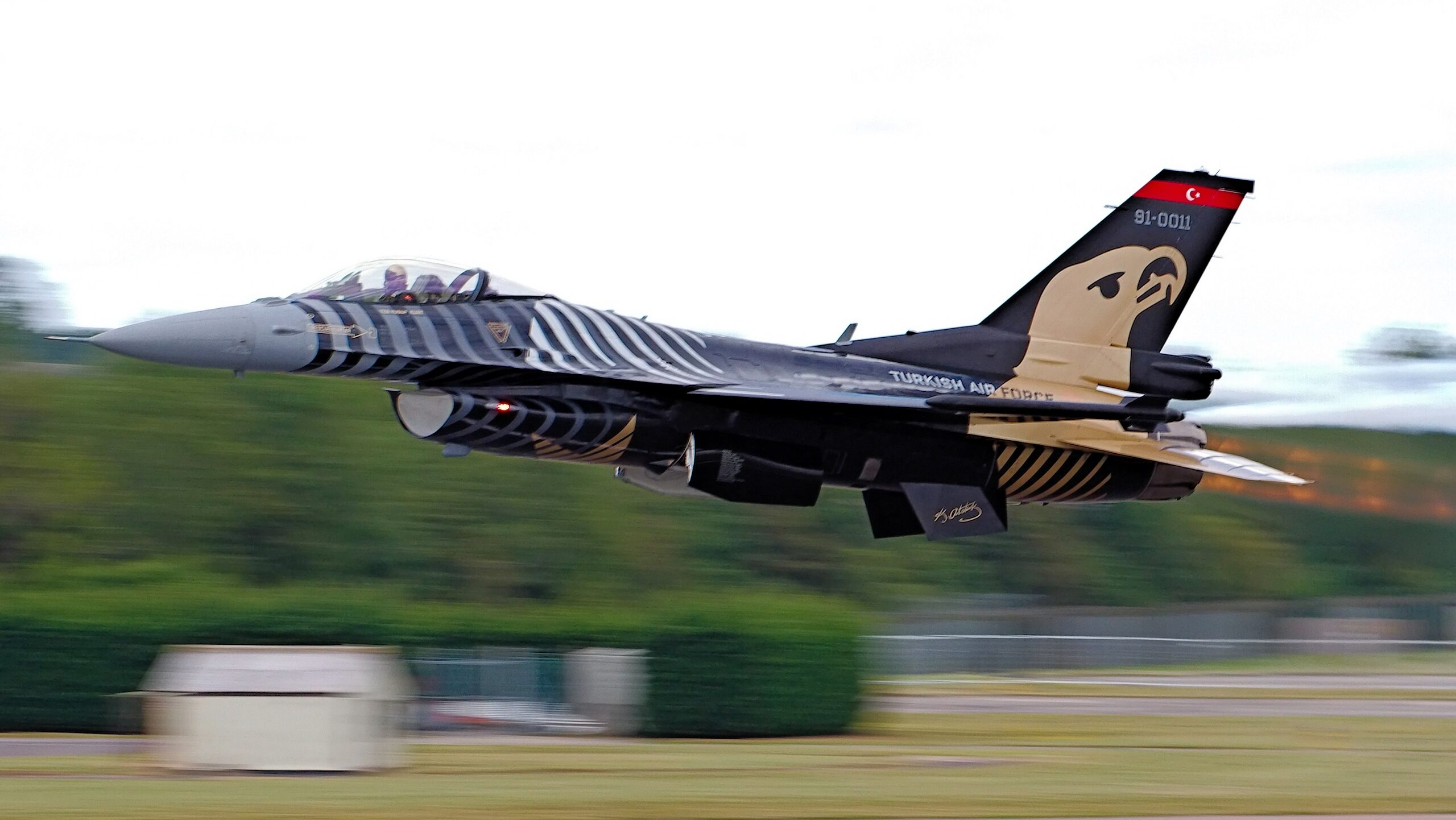
Buscando respuestas para eso, me encontré con esto:
Turkey Scales Back F-16 Deal With US, Citing Domestic Capabilities - The Media Line
Turkey has scaled back its $23 billion F-16 […]
 themedialine.org
Es cierto. Lo que salga de Grecia tendría que entrar tal cual.... B50 noventero que queda Adv+ con electrónica cascadeada.
En cuanto a Turquía, no lo haría de inmediato, daría un tiempo para que maduren SOM-J, GÖKHAN y lo que les autoricen hacer en sus F-16 (muy dinámicas las noticias de la industria Turca).
Saludos
Temas similares


- Respuestas
- 11
- Visitas
- 3K


- Respuestas
- 17
- Visitas
- 3K
