




Nearly a year after the announcement of the F-47 as the future combat aircraft of the Air Force, the U.S. Navy has hinted that the selection of its future sixth-generation F/A-XX fighter could be announced soon, which would allow the program to emerge from the state of suspense it has been in for months. According to reports from specialized U.S. media, the final decision on the design of this new platform would be made during the coming month of August, as suggested by recent statements issued by senior service officials.
One of the main voices to address the issue was the current Chief of Naval Operations, Admiral Daryl Caudle, who during the Sea-Air-Space 2026 exposition stated: “One of the challenges we’re seeing is that our competitors are not only improving their anti-air capabilities, whether air-to-air or surface-to-air, but the lower cost of access to very capable weapons is also creating more actors in the field where that level of stealth and technology is required. So it’s not about the need for a peer adversary. It’s simply about having an aircraft that can operate with a level of uncertainty and with an acceptable level of risk.”


On previous occasions, Admiral Caudle himself had already stressed that the U.S. Navy would need to accelerate its pace in developing the F/A-XX, taking into account the rise in tensions around the world and the pressing need to have more capable assets to confront them. As reported by The War Zone, this issue was the subject of frequent conversations between naval authorities and the Deputy Secretary of Defense, Steve Feinberg, as was the acquisition of complementary unmanned systems in order to shape a fully renewed air power capability. An illustrative example of the latter lies in the MQ-25 Stingray drones, a system developed by Boeing to improve the current refueling capabilities of the embarked air wings aboard U.S. aircraft carriers.
On the other hand, it was once again confirmed that the U.S. Navy’s F/A-XX program currently has two companies seeking to position their designs, namely Boeing, which will also manufacture the F-47, and Northrop Grumman. However, despite being at this advanced stage of selection, the institution and the Pentagon had previously tempered expectations of a decision in the short term, citing doubts regarding the existing industrial capacity for the country to embark on two major projects that would provide different sixth-generation fighters to the Air Force and to the Navy itself, while at the same time sustaining industrial capacity for existing platforms.


On that point, Admiral Caudle stated: “We have a lot of airframes in production. We have the F-35 program. We have the F-47 program. In addition, we’re still building the F/A-18 Super Hornet (…) a lot of aircraft are being manufactured. The Air Force has a lot of demand for these systems. The Navy does too (…) One of the contractors that would build this aircraft for us is in a situation where it cannot deliver it on the timeline we need. So, in this decision, a double-check-before-deciding mindset was applied.”
It is worth considering at this point that this would not be the first time the service has said it was close to advancing in the selection of the design that will become its F/A-XX without having fully resolved these challenges related to industrial capacity, a broader problem within the United States that also affects other types of programs. During the second half of last year, sources within the U.S. Navy had suggested that they were already waiting to sign the contract with one of the two manufacturers, and there were even reports claiming that the Secretary of Defense (Pete Hegseth) had already given his approval to move forward, which has not happened so far.

So much so that the U.S. legislature has made efforts to ensure that the U.S. Navy receives a budgetary boost that would allow it to keep moving forward with the F/A-XX program, with current reports estimating those funds at around $1.69 billion. This is a considerably larger boost than the $74 million requested by the institution in its budget request for fiscal year 2026, as well as the $140 million that would be requested for the next cycle; low amounts in light of the doubts cited above. By way of comparison with the F-47 program, analysts note that the latter would receive nearly $5 billion in additional funding during fiscal year 2027, illustrating the prioritization of the fighter that will equip the Air Force.
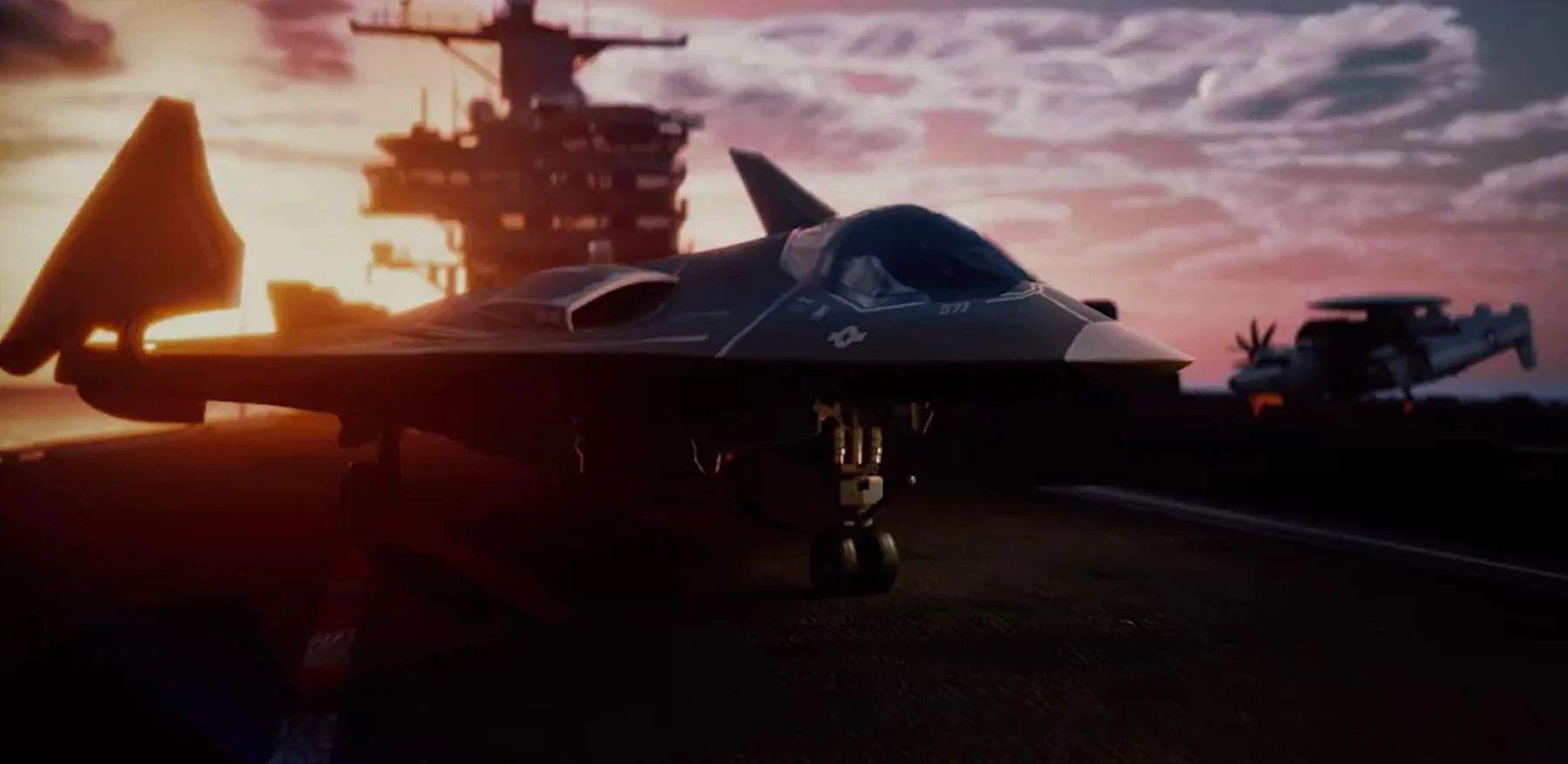
Beyond the funding issue, it should also be noted that both the U.S. Navy and the two companies competing for the F/A-XX contract have still not provided details on what its capabilities will be, such as payload, range, and speed, along with other relevant factors. So far, both Boeing and Northrop Grumman have only revealed images showing their respective conceptual designs, with the former displaying similarities to the F-47 model. Yesterday, Northrop Grumman also released a short video in which a render of its candidate could be seen on the deck of an aircraft carrier, although it was accompanied by phrases such as “a sea change is coming” rather than technical details.
Returning again to Admiral Caudle’s remarks: “We track very carefully, we put the system through extreme testing, and we evaluate the threat along a projected path to determine whether the existing designs we have seen will continue to be sufficient to counter it.” In a later segment, he noted that for this to occur, speed in development and deliveries would be one of the key factors to consider.
Finally, it cannot be overlooked that while U.S. sixth-generation fighters continue to advance with difficulties and delays, China has made significant progress in the development of its own platforms. As we have reported on previous occasions, Washington’s main geopolitical competitor has already conducted test flights with the enigmatic J-50 fighter (also at times referred to as J-XD or JCDS) designed by Shenyang, something captured in images by local observers. While there is no official confirmation regarding what stage of development the prototype in question is at, this must also be considered alongside the case of Chengdu’s J-36 fighter-bomber, which partly explains what Caudle said about speed as a key factor.
Images used for illustrative purposes
You may also like: The U.S. Air Force reverses course on retiring its A-10C Thunderbolt II: they will remain in service until 2030