




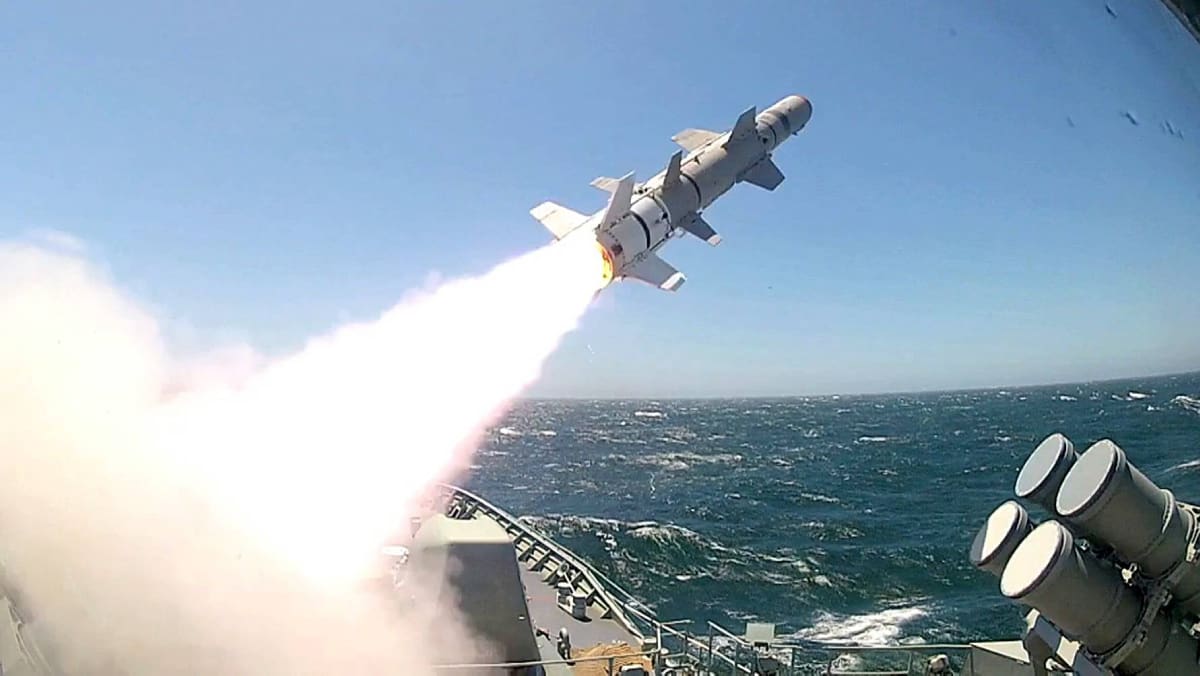
Within the framework of the Foreign Military Sales (FMS) programs, the United States reaffirmed that the provision of Harpoon anti-ship missile missiles to Taiwan continues to be a priority, in line with its policy of strengthening the island’s defensive capabilities in the face of growing military pressure from China.


The definition was expressed by the director of the Defense Security Cooperation Agency (DSCA), Michael F. Miller, during a hearing in the U.S. Congress, where he clarified that, despite reports pointing to a possible priority for Saudi Arabia in the delivery of these systems, Taiwan maintains precedence in the allocation of these resources. “In the case of competition for the provision of Harpoon missiles, Taiwan would have priority,” the official stated, emphasizing that this directive has been in force since 2023 and is part of Washington’s strategic guidelines in defense cooperation.
A system for the island’s coastal defense
The package approved in October 2020 contemplates the possible sale of up to 100 Harpoon Coastal Defense Systems (HCDS), along with approximately 400 RGM-84 Harpoon Block II missiles, in addition to training units and associated equipment, for an estimated value of USD 2.37 billion.
These systems are designed to strengthen Taiwan’s ability to deny maritime access to adversary forces, especially in a conflict scenario in the Taiwan Strait. The arrival of the first systems is scheduled for around 2028, within a phased delivery process. In parallel, the United States has continued advancing other components of the Harpoon program for Taiwan, including logistics support packages and the integration of these missiles into aerial platforms such as the F-16 Fighting Falcon, thus expanding their employment capacity across different domains.


Context of pressure in the Indo-Pacific
The prioritization of Taiwan within the FMS program is part of a broader U.S. strategy aimed at reinforcing deterrence capacity in the Indo-Pacific, particularly in response to China’s military strengthening and its repeated demonstrations of pressure on the island. In this scenario, systems such as the Harpoon take on a central role within Taiwan’s so-called asymmetric defense strategy, as they allow engagement of surface ships at considerable distances and complicate any attempt at blockade or amphibious landing.
You may also like: The Taiwanese Armed Forces has received the first batch of ALTIUS-600 loitering munitions