





The defense company RTX announced on 8 September a US$205 million award from the US Navy for the continued production of the Phalanx Close-In Weapon System (CIWS). ZM spoke with RTX about the importance of this award and the company’s interest in supplying Phalanx to Latin American navies and armies.
The RTX spokesperson argued, “Latin American navies seeking to enhance their maritime security and protect critical assets can benefit from the Phalanx system.” The system features “advanced radar and gun technology, which provides rapid detection, tracking, and engagement of incoming threats,” the company told ZM, adding, “its ease of integration into existing platforms and minimal maintenance requirements make it an ideal choice for navies operating in diverse and challenging environments.”

South American shipyards are building patrol vessels, frigates, and multipurpose transport ships for local navies. Leonardo, for example, will supply a main gun for the Colombian frigate program. Other defense ministries, navies and shipyards could consider RTX’s Phalanx as a secondary defense system.
The Phalanx weapon system is described by RTX as a rapid-fire, computer-controlled, radar-guided gun that can “defeat anti-ship missiles and other close-in threats that may penetrate preceding layers of defense.” “Phalanx can fire at a rate of up to 4,500 rounds per minute,” RTX told ZM. In the US, the Phalanx is installed on board surface combatant ships. For example, the amphibious assault ship USS Wasp (LHD 1) and other Wasp-class vessels have three Phalanx onboard, according to reports.

The new award provides for the continued production and delivery of Phalanx until 2029. The RTX spokesperson told ZM, “this award will bring the total number of systems produced over the next three years to more than 100.”
As many as 24 US allies operate the system. In late 2023, the British shipyard Babcock announced a three-year contract extension to support the British fleet’s Phalanx systems. “The contract will provide support for up to 41 systems, including nine overhauls and upgrades,” Babcock explained at the time. The HMS Prince of Wales (R09), Queen Elizabeth-class aircraft carrier, operates the Phalanx, for example.

More recently, earlier this year, the HMS Dauntless, a Type 45 destroyer operated by the British Royal Navy, carried out a live fire test in the Indo-Pacific against uncrewed systems, including the QinetiQ Banshee Whirlwind uncrewed aerial system and the Hammerhead uncrewed surface vehicle. The warship utilized RTX’s Phalanx automated gun, as well as other weapons aboard, to defeat the swarm of small aerial and surface threats.
More sales involving the Phalanx may be on the horizon for RTX. Singapore is currently looking for new warships to modernize its fleet, and the tiny country is turning to South Korea and Japan as potential suppliers. The defense news agency Shephard has reported that Japan could supply as many as five second-hand Abukuma-class destroyer escorts, which are equipped with the Phalanx.
Meanwhile, in Turkiye, the Barbaros-class frigate recently completed its mid-life upgrade, which included the installation of one Mk 15 Phalanx CIWS on top of the hangar, according to the defense news agency Janes.
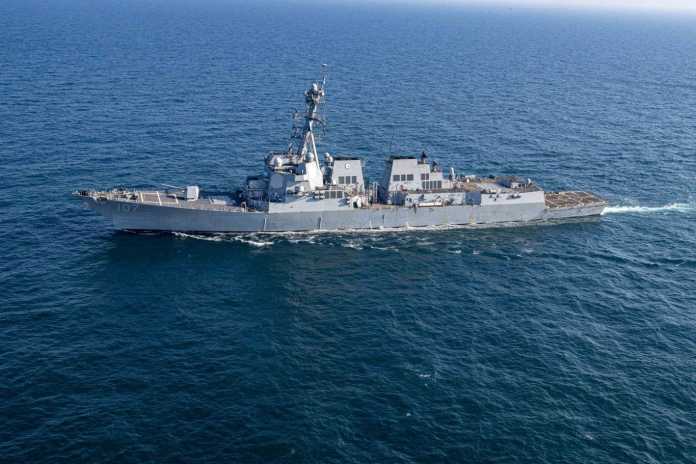
RTX describes the Phalanx as a “last line of defense” for surface vessels, capable of carrying out several functions, including search, detection, threat evaluation, tracking, engagement, and kill assessment.
The Block 1B version adds control stations that enable operators to visually track and identify targets before engagement, according to RTX’s website. The system was used by the Arleigh Burke-class destroyer USS Gravely (DDG-107) in the Red Sea to destroy a missile fired by Houthi rebels.
The company has also developed a land version also utilized by the US Army and allies. Latin American armies could also use Phalanx to protect critical infrastructure and strategic locations.
You may also like The US shipyard Metal Shark delivered the new patrol vessel Arcturus to the Navy of the Dominican Republic


