





The global competition to develop the first sixth-generation fighter is in full swing and marks a turning point in the history of military aviation. The technological advances being driven by the U.S., China, Russia, and some European countries aim at aircraft that are no longer limited to being static platforms, but rather systems in constant evolution thanks to artificial intelligence, software updates, and the incorporation of autonomous drones that operate in conjunction with manned aircraft.
Companies such as the British BAE Systems maintain that the traditional generational classification will no longer make sense. “We have to leave the generational nomenclature because the planes are going to be evolving all the time,” said Mike Baulkwill, Director of Combat Air Strategy at the firm. His concept, called Combat Air Continuum, proposes a 25-year plan in which there will be a transition from the coexistence of fifth- and sixth-generation aircraft to a “third era” of air combat, characterized by the integration of autonomous fighters and, eventually, the total replacement of human pilots by artificial intelligence systems.
In this context of constant technological evolution, the U.S. is advancing with its Next Generation Air Dominance (NGAD) program to develop and produce the future F-47 of the Air Force and the F/A-XX program, which seeks to provide fighters of this generation but for the U.S. Navy. At the same time, Europe is promoting the Future Combat Air System (FCAS), a joint project of France, Germany, and Spain for 2040, while the United Kingdom, in alliance with Italy and Japan, is developing the Global Combat Air Programme (GCAP) with the goal of having it operational by 2035.
Finally, we find Russia and China, seeking to enter the exclusive group of countries that have projects to develop fighters of this caliber. Moscow is designing the MiG-41, the natural successor to the MiG-31, while Beijing, like the U.S., is advancing two projects simultaneously: the Chengdu J-36 and the Shenyang J-50.
This situation has raised a high degree of concern in Washington, as evidenced by General Mark D. Kelly, commander of the U.S. Air Combat Command, who warned that China is rapidly advancing in its own version of sixth-generation fighters, with capabilities comparable to those planned by NGAD.
Finally, before analyzing each of these programs in detail, it is worth highlighting that there is a common element in almost all programs: the incorporation of swarms of autonomous drones, which will transform the concept of air combat by allowing coordinated operations, defense saturation, and intensive use of artificial intelligence.

United States: F-47 and F/A-XX at the center of the debate
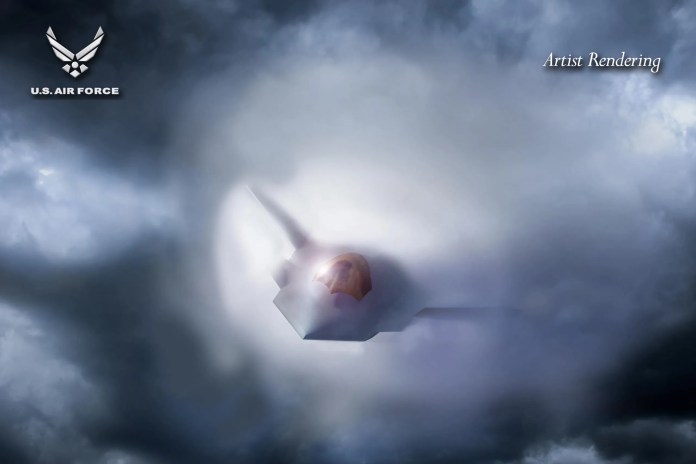
In the U.S. case, the internal competition between programs reflects the magnitude of the challenge. The Air Force has selected the F-47, developed by Boeing, as the centerpiece of its NGAD program. This sixth-generation fighter seeks to integrate stealth capabilities, supersonic speed, advanced sensors, and joint operations with drones.
Additionally, the Chief of Staff of the U.S. Air Force (USAF), General David W. Allvin, revealed this week that the new sixth-generation F-47 fighter is already in production. The goal set by the White House is to have a first aircraft ready to fly by 2028.
In parallel, the Navy is advancing the F/A-XX project, which is being carried out by Northrop Grumman, intended to replace the current F/A-18E/F Super Hornets in the 2030s. The company released a conceptual image showing a design focused on stealth, with an integrated fuselage and space for an AESA radar. The aircraft would include artificial intelligence, team operations with unmanned vehicles (MUM-T), and a 25% improvement in range compared to current platforms.

The program faces significant budgetary tensions. For fiscal year 2026, the Department of Defense allocated only $74 million, compared to the Navy’s request for an additional $1.4 billion on its Unfunded Priorities List. The Senate Appropriations Committee later approved the inclusion of those funds, although the Pentagon’s priority appears to be the F-47.
Admiral Daryl Caudle, head of the U.S. Fleet Forces Command, warned that the lack of a sixth-generation carrier-based fighter could compromise the ability to maintain air superiority in future scenarios. “The nuclear aircraft carrier remains the core of U.S. maritime combat power, and its effectiveness depends on having an air wing equipped with advanced fighters,” he said.
To further complicate the situation for the F/A-XX, Boeing unveiled what would be the first official conceptual image of its future carrier-based fighter for the U.S. Navy’s F/A-XX project, which shows significant similarities to the F-47 and, hypothetically, could mean that the aerospace company is developing a carrier version of the sixth-generation fighter that will equip the USAF.
The situation reflects a strategic dilemma: developing both the F-47 and the F/A-XX simultaneously could exceed the country’s industrial and financial capacities. Some proposals suggest that Boeing could be developing a carrier version of the F-47, which would reduce costs and unify platforms.

China: progress with the J-50 and the J-36
The People’s Liberation Army of China is working on at least two sixth-generation fighters: the J-36 and the J-50. The latter combines stealth, artificial intelligence, advanced sensors, and a network-centric operations architecture. Its optimized fuselage reduces radar signature, while engines with thermal protection decrease infrared emissions. It lacks external weapon points, confirming the use of internal bays to preserve stealth.
The J-50 would not only function as an air superiority fighter but also as an airborne command center, capable of coordinating actions in real time, redistributing missiles launched from other platforms, and leading swarms of drones in penetration missions. That is, with the incorporation of artificial intelligence, it reduces the pilot’s workload, allowing the aircraft to process large volumes of data and react quickly to threats. This makes it a “force multiplier” for the People’s Liberation Army.

Its development reinforces China’s position in the technological race and shows sustained progress in integrating networked combat capabilities and autonomous operations. But, as mentioned, it is not Beijing’s only project, since in April of this year, new evidence began to circulate about China’s second sixth-generation project: the J-36.
Developed by Chengdu Aircraft Corporation (CAC), it is distinguished by its larger size and wingspan, with three engines and a flying wing design without a vertical stabilizer. In contrast, the Shenyang J-50 presents a twin-engine configuration and smaller dimensions. According to experts, while the J-36 could fulfill functions similar to a stealth tactical bomber, the J-50 would be positioned as a first-line multirole fighter.
Images released at the end of 2024 and the first months of 2025 showed the J-36 crossing a highway near Chengdu facilities. The material allowed observing details of its structure, such as a two-tone splinter camouflage scheme and a dorsal air intake with DSI (Diverterless Supersonic Inlet) technology, also present in fifth-generation aircraft. Another notable aspect is the cockpit configuration, with two side-by-side seats, similar to that seen in aircraft like the Su-34, reinforcing the hypothesis of a design intended for deep penetration missions and tactical strike.

In May 2025, new images provided a frontal view of the J-36, confirming the width of its cockpit and large canopy, as well as highlighting the size of the fuselage. Lower trapezoidal air intakes similar to the F-22 were distinguished, along with a large electro-optical window on the side of the nose. According to analysts, the frontal perspective emphasized the aircraft’s proportions and reinforced the impression that it is a large aircraft intended for advanced tactical operations.
The J-36 shares prominence with the J-50, which was also recorded in new footage. The latter showed an integrated fuselage with the cockpit, internal weapon bays, and control surfaces at the wingtips, features typical of next-generation fighters.
Although there is still no official confirmation of the specific functions of both models, experts indicate that they could be both operational prototypes and experimental platforms intended to test technologies that will later be incorporated into future Chinese combat systems.
Russia: development of the MiG-41
In January 2024, the First Deputy Chairman of the Defense and Security Committee of the Federation Council, Viktor Bondarev, confirmed that the Russian Aerospace Forces are advancing the development of the MiG-41 as a future sixth-generation interceptor. In statements, Bondarev said: “…Today, Russian combat aviation is constantly improving: the fleet of aircraft already in service is being modernized, new highly maneuverable interceptors and fighters are being developed, produced, tested, and introduced…” Among these projects, he mentioned the production of the Su-57 and the modernization of the Su-30, Su-34, and Su-35.

The MiG-41 falls under the PAK DP project, conceived as a long-range interception program. Bondarev, who more than a decade ago promoted the PAK DA project during his tenure as commander of the Aerospace Forces, had rejected the idea of resuming MiG-31 production, considering it more appropriate to allocate resources to a new aircraft. Meanwhile, Russia updated its existing interceptors to the MiG-31BM version while starting the design of a successor.
MiG’s CEO, Ilya Tarasenko, stated some time ago that the PAK DP program “…is the logical development of our MiG-31 aircraft. Once contacted by the Ministry of Defense, we will take this project closely, and I believe its deliveries will begin in mid-2020.” However, development has experienced significant delays. The MiG-41 concept points to a stealth supersonic fighter capable of carrying hypersonic missiles, optimized for Arctic operations, and with potential to be converted into an unmanned aircraft.
In November 2024, new information indicated that the MiG-41 would be capable of exceeding Mach 4 (4,900 km/h) and flying at altitudes close to space. Its offensive capabilities include anti-missile laser cannons and electromagnetic weapons. However, various analysts doubt its feasibility. According to them, one of the main problems lies in the fuselage’s resistance to the high temperatures generated at that speed and in integrating its weapon systems.
Russia’s economic and military context also generates uncertainty regarding the project’s realization. Reports on resource limitations derived from the war in Ukraine reinforce doubts about sustaining such a high-tech program. Still, Mikoyan Gurevich Corporation, responsible for the design, maintains that the MiG-41 will represent a leap in aeronautical engineering, with the potential to operate in the upper atmosphere and even reach low Earth orbit.

The aircraft would incorporate directed-energy (DEW) laser cannons and electromagnetic pulse weapons, although their integration poses significant technical challenges, such as generating sufficient onboard power and atmospheric interference. The use of pulse detonation engines is also planned, a technology still in the experimental phase in countries such as the United States and Japan.
Despite the doubts, Moscow is maintaining the schedule. An official of the State Duma Defense Committee recently announced that “the Chief of Staff made the decision to sign the document to carry out research work on the MiG-41 project.”
Europe: between the progress of GCAP and the fragility of FCAS
Europeans have two programs for future sixth-generation fighters. Starting with the Future Combat Air System (FCAS), a joint initiative of Germany, France, and Spain launched in 2017, it faces its most delicate stage since inception. Valued at 100 billion euros and conceived to replace Rafale and Eurofighter Typhoon around 2040, the program contemplates the development of a manned sixth-generation fighter (NGF), associated drones, and a networked link system.
Tensions between Paris and Berlin have intensified over the distribution of work and technological leadership. According to reports, Dassault Aviation proposed assuming up to 80% of the tasks related to the NGWS, a proposal that was rejected in Germany, although French authorities denied that figure. Social Democratic MP Andreas Schwarz warned: “At some point, the [German] Parliament will have to say: ‘Either we need this plane, or we don’t need it.’”

German Chancellor Friedrich Merz said in Madrid, alongside Spanish Prime Minister Pedro Sánchez: “We share the assessment that the current situation is unsatisfactory. We are not advancing with this project.” Meanwhile, German government spokesman Stefan Kornelius emphasized that “the distribution of loads and work in this weapons project must be carried out according to the contract.”
The governance scheme is another critical point. Dassault insists on greater decision-making power to avoid delays, while Germany and Spain defend a balanced distribution. From the French side, questions remain about whether the current organization will allow delivering the aircraft on time. Added to this is the political uncertainty in France following the appointment of Sébastien Lecornu as prime minister, a figure who had previously participated in FCAS discussions.
Dassault Aviation CEO Éric Trappier reinforced the criticisms: “The question is not whether Dassault leaves the program, but whether it can continue under these conditions.” According to the executive, the tripartite structure paralyzes key decisions and lacks defined leadership. The lack of consensus has blocked the start of the program’s second phase, planned to advance with the technology demonstrator that should fly in 2028.

In this scenario, Germany is evaluating alternatives such as deepening cooperation with Spain, adding Sweden through Saab, or even exploring convergence with the United Kingdom, which leads the Global Combat Air Programme (GCAP). Belgium, meanwhile, abandoned its initial interest in FCAS and opted to acquire more U.S. F-35As.
The upcoming trilateral meeting of defense ministers, scheduled for October, will be key to defining whether the project advances to its next phase. Analysts warn that if no agreement is reached, the fragmentation of programs in Europe would jeopardize the financial and strategic viability of their sixth-generation air developments.
The GCAP, meanwhile, seeks to put a sixth-generation fighter into service by 2035. In June 2025, the three countries announced the creation of Edgewing, a joint venture composed of BAE Systems, Leonardo, and Japan Aircraft Industrial Enhancement Co., responsible for designing and building the aircraft. Its main headquarters will be in Reading, United Kingdom, with facilities also in Italy and Japan.

The first prototype, developed by BAE Systems, is scheduled to conduct its maiden flight in 2027. The aircraft features a single-seat configuration with twin tails, two engines, and a larger cropped delta wing designed to improve range, speed, and payload. Although it will not yet include the virtual reality cockpit or advanced displays planned for the final model, it will serve to validate structural, aerodynamic, and propulsion technologies.
“The prototype is already built to two-thirds of its structural weight, with the main fuselage, wings, and vertical stabilizers taking shape,” reported the British company. To accelerate development, components from existing platforms, such as the Eurofighter Typhoon’s EJ200 engines, will be incorporated.
In parallel, Mitsubishi Electric (Japan), Leonardo UK (United Kingdom), Leonardo, and ELT Group (Italy) formed the GCAP Electronics Evolution (G2E) consortium, responsible for developing the ISANKE & ICS sensor and communications system, one of the core components of the future fighter. This system will allow integrating large volumes of information in complex operational environments and will have support throughout the aircraft’s life cycle.
The GCAP design was presented at the 2024 Farnborough International Airshow. It is expected to incorporate sensors capable of processing up to 10,000 times more data than current radars and a high degree of interoperability with other aerial systems. Japan, as a preventive measure against possible delays, is evaluating acquiring additional U.S. F-35 units to cover the transition until the new aircraft enters service.

Conclusion
The race to develop sixth-generation fighters reflects a global scenario marked by technological competition, political tensions, and the pursuit of maintaining air superiority in an increasingly contested strategic environment.
In the United States, the F-47 and F/A-XX programs are advancing with strong budgetary investment and a schedule aimed at ensuring the continuity of technological hegemony against emerging competitors. China, for its part, is advancing the J-36 and J-50 as part of a military modernization strategy intended to consolidate its influence in Asia and project power beyond its immediate region.
Russia is betting on the MiG-41 as a hypersonic interceptor, although doubts persist about its funding and short-term technological feasibility, given that, as mentioned, various technologies proposed for the fighter are still in the experimental phase.
In Europe, the situation is more complex. FCAS faces internal frictions among its main partners—Germany, France, and Spain—regarding task distribution and industrial leadership, which jeopardizes deadlines and continuity. In contrast, the Global Combat Air Programme (GCAP), led by the United Kingdom along with Italy and Japan, shows greater cohesion and a defined schedule aimed at having an operational system by 2035, although it also faces risks of delays.
*Images for illustrative purposes
*Original text written in Spanish by Germán Alejandro Romero
You may also like: The new stealth fighter Shenyang J-35 of the Chinese Navy and Air Force would be equipped with the LD-8A anti-radiation missile

