





With the goal of evaluating its performance under extreme conditions, the Brazilian Air Force (FAB) conducted a new round of testing at Anápolis Air Base during February. In this campaign, the experimental Saab F-39 Gripen (tail number 4100) was subjected to a series of flights to assess its performance with external loads in a high-temperature, high-altitude environment.

The main objective of these tests was to validate the fighter’s capability to operate under conditions of 32°C and at an altitude of 1,100 meters above sea level with a full load configuration. To this end, the aircraft was equipped with two 1,100-liter fuel tanks under the wings, along with short- and long-range air-to-air missiles: two infrared-guided Diehl IRIS-T and two radar-guided MBDA Meteors. A total of 14 missions were conducted, each lasting 35 minutes, amounting to 62 landings and eight hot ground refuelings (with engines running), optimizing operational efficiency procedures.
According to Jonas Petzén, Saab’s head of flight testing, “We have already conducted tests in hot, dry, and humid environments, in Anápolis and Belém, but with special focus on environmental testing, that is, the Gripen’s ability to withstand extreme heat and humidity. Now, we are verifying flight quality and maneuverability from the pilot’s perspective.”

Among the evaluated trials, one scenario simulated the aircraft—carrying external loads—approaching for landing with a wide turn and aligning with the short runway just before touchdown. Initially, flights were performed without external loads, progressively increasing weight by adding missiles and filling the external fuel tanks. These tests complement previous evaluations carried out in hot, dry, and humid environments in various locations, such as Belém and Anápolis, now focusing on flight quality and maneuverability from the pilot’s point of view.
In addition to general performance, the evaluations also tested the Gripen’s flight control system, performing drastic corrections in the final landing phase to verify the aircraft’s expected responses and validate engine and brake system performance under heavy load.

It is worth noting that this is not the first time the Gripen has been evaluated in extreme climates. In November 2023, at the same base, the Gripen FAB 4100 was subjected to prolonged sun exposure on the runway and three days of flights in average temperatures of 32°C, completing one hour of flight per day.
Although the Gripen has been designed to operate in a wide variety of climates, the Brazilian Air Force has emphasized the need to ensure its performance in hot and humid environments, which was a key requirement of the program when acquiring these aircraft, considering Brazil’s geography.
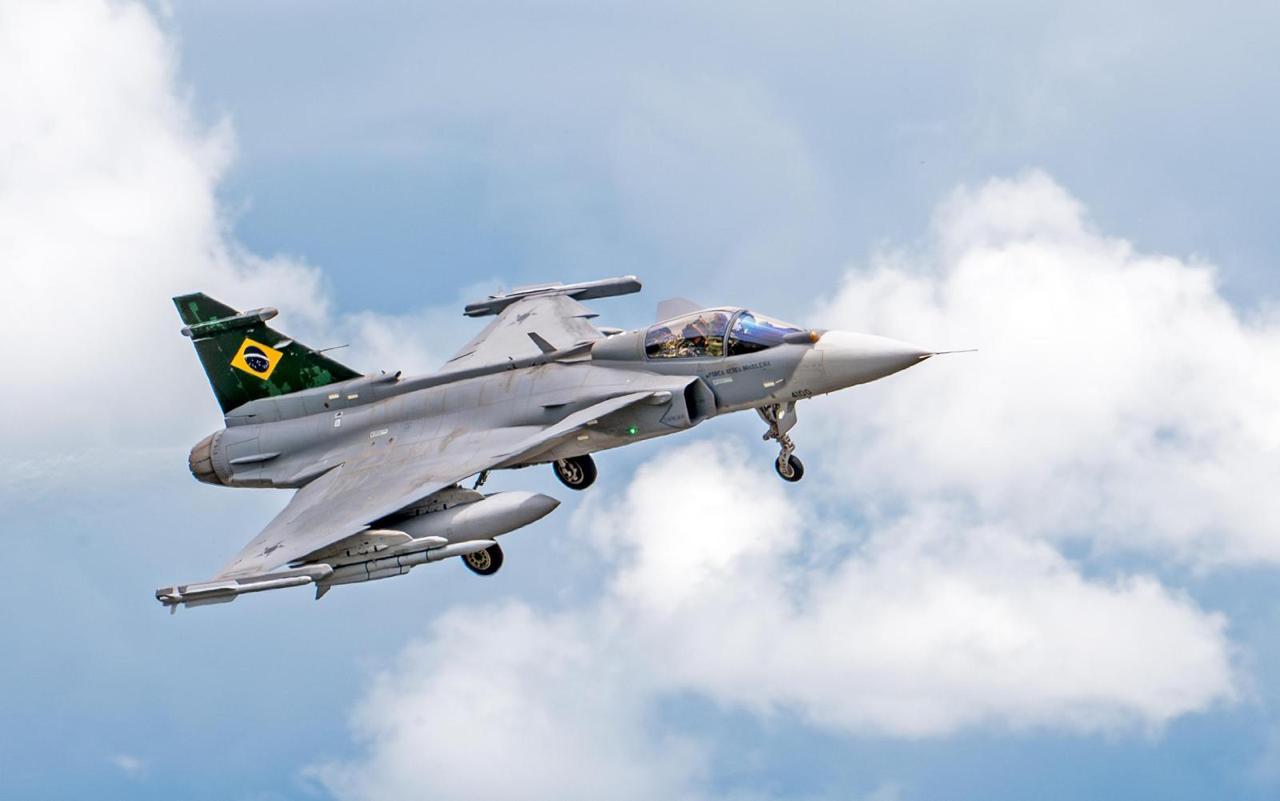
*Image credits: Saab.


